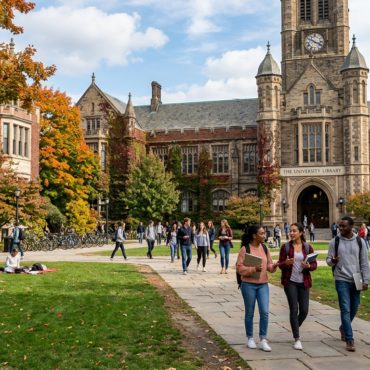
A professor gets an email that looks like it came from a colleague at another university. It says there’s a document to review before tomorrow’s meeting. The professor clicks, sees a familiar Microsoft sign-in page, and signs in.
There really is a meeting tomorrow. The sender might even be a real colleague whose account was compromised. That’s what makes this kind of email work. On a campus, people share documents with outside organizations all day long.
Some phishing sites can capture the session created when a person signs in, even after the person completes multifactor authentication. The attacker can then use that session to access the account. If they get into the mailbox, they can read ongoing conversations and reply from an address people already trust. The next email might go to a department administrator with access to shared files, or to someone in Finance who can change where a payment goes. [Microsoft’s analysis of phishing that steals sign-in sessions](https://www.microsoft.com/en-us/security/blog/2022/07/12/from-cookie-theft-to-bec-attackers-use-ait…
Sometimes nobody clicks anything.
A research lab puts a server online so collaborators can reach it. A vendor sets up remote access to manage a building system. A department keeps an old web application running because it still does one thing they need. An attacker scanning the internet finds one of those systems and sees that it’s running software with a known vulnerability. They can try to exploit it before they know what the system does or who owns it.
That’s one reason I’d ask a university to show me what someone can reach from outside campus. I’d want to see the systems that belong to individual colleges, labs, and Facilities, along with the ones central IT manages. In a 2025 Sophos survey of higher education organizations that had experienced ransomware, exploited vulnerabilities were the most frequently reported technical entry point. The survey covered multiple countries and asked organizations that had already been hit about their experience. [Sophos, *The State of Ransomware in Education 2025*](https://www.sophos.com/en-us/blog/the-state-of-ransomware-in-education-2025)
There’s another version of this that can look like a normal Tuesday. A vendor account signs in and connects to a system it’s allowed to maintain. The account is valid. The connection works. The person using it has the vendor’s stolen credentials. If the account can reach more systems than the vendor needs, that one login can give an attacker room to move. And if nobody can say who used a shared vendor account on a given day, it’s harder to tell routine maintenance from an intrusion. [CISA’s incident and vulnerability response playbooks](https://www.cisa.gov/sites/default/files/2024-08/Federal_Government_Cybersecurity_Incident_and_Vuln…
**Once someone gets in, the question is what they can reach from there.**
Take a campus lab with 500 computers built from the same image. If they all have the same vulnerable software, an attacker who can reach them may be able to use the same weakness repeatedly. If those computers also share a local administrator password, compromising one can give the attacker a way into others. Put a shared file server within reach, and now a problem that started on a lab computer can affect an entire department.
The same question applies in the cloud. If an attacker gets into a staff member’s account, which mailboxes and files can that account open? Can it share documents outside the university? Does the person use that same account for administrative work? How much the attacker can do depends in part on decisions the university made about that account long before anyone reported an incident.
When I talk through this with a campus team, I’d start with something they can picture. A professor’s account is compromised on a Friday afternoon. What could someone read, download, or share before the help desk gets the first call? Then try it with a lab computer and a vendor login. Ask the people who manage those systems to show you where the access stops. If everyone has a different answer, that’s the part I’d test first.
If you work in higher ed, pick one of those scenarios this week and ask your team to walk you through it. If a professor’s account were compromised today, what could the attacker reach, how would you know, and who could cut off access?
If you’d like help testing those answers, reach out to us at **Alias Cybersecurity**. We can work with your team to trace a realistic attack path through your campus environment and identify where to stop it.